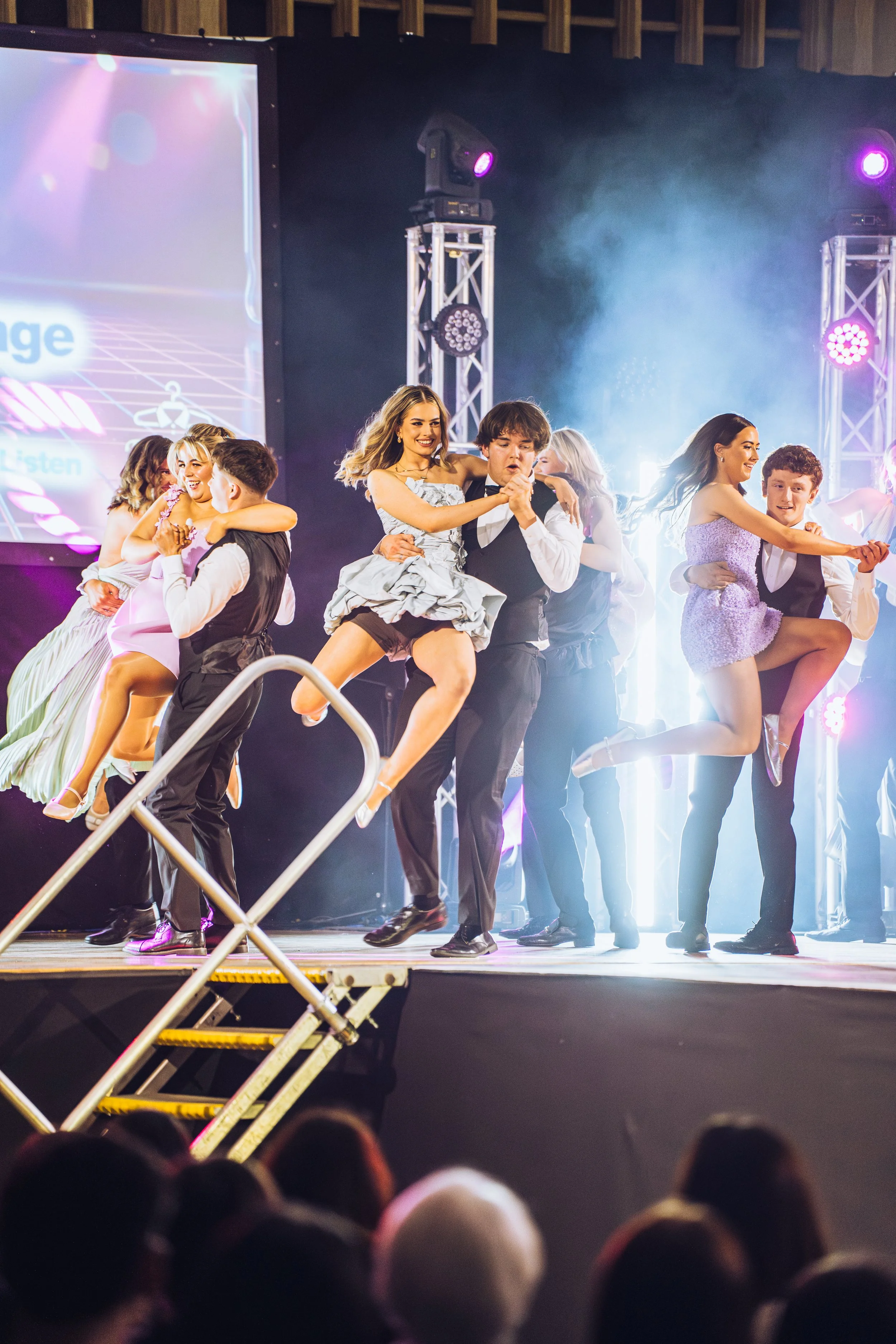
QUB SWOT 2026, Whitla Hall, Belfast
Our third year in a row
This was our third year supporting the QUB SWOT event at Whitla Hall, Queen’s University Belfast. Returning to the same event gives you a clearer read on the room, the format, and where things can be tightened up.
The brief was broadly similar to previous years, but with one key technical requirement that shaped the delivery.
Event Overview
Client: QUB SWOT
Location: Whitla Hall, Belfast
Duration: 3 days
What we provided: Full AV hire, production and on-site support
Whitla Hall is a fantastic venue, but like any large auditorium, it needs the right approach to make sure everything feels clear, visible and joined up for the audience.
The Key Challenge
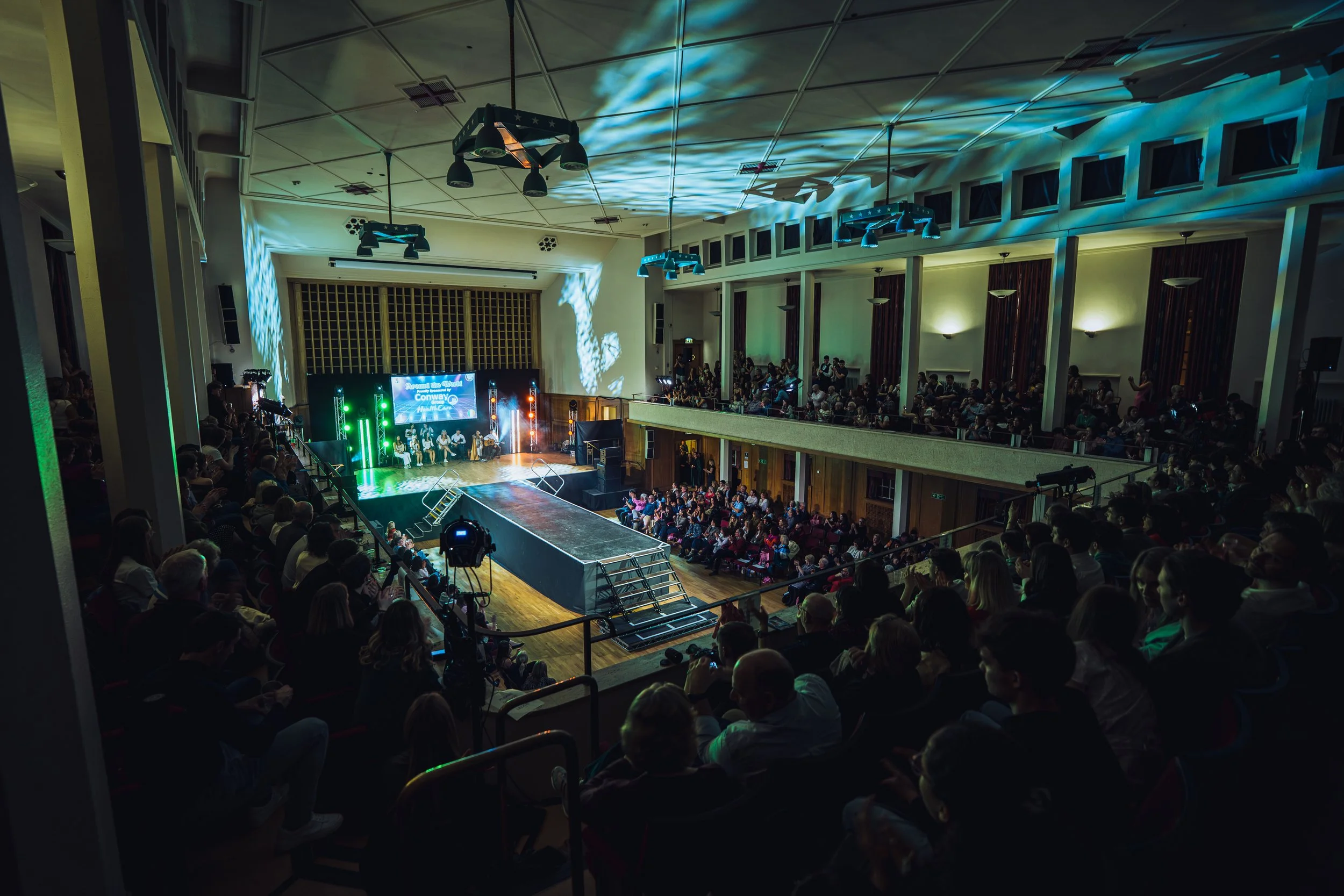
The main challenge was the catwalk staging.
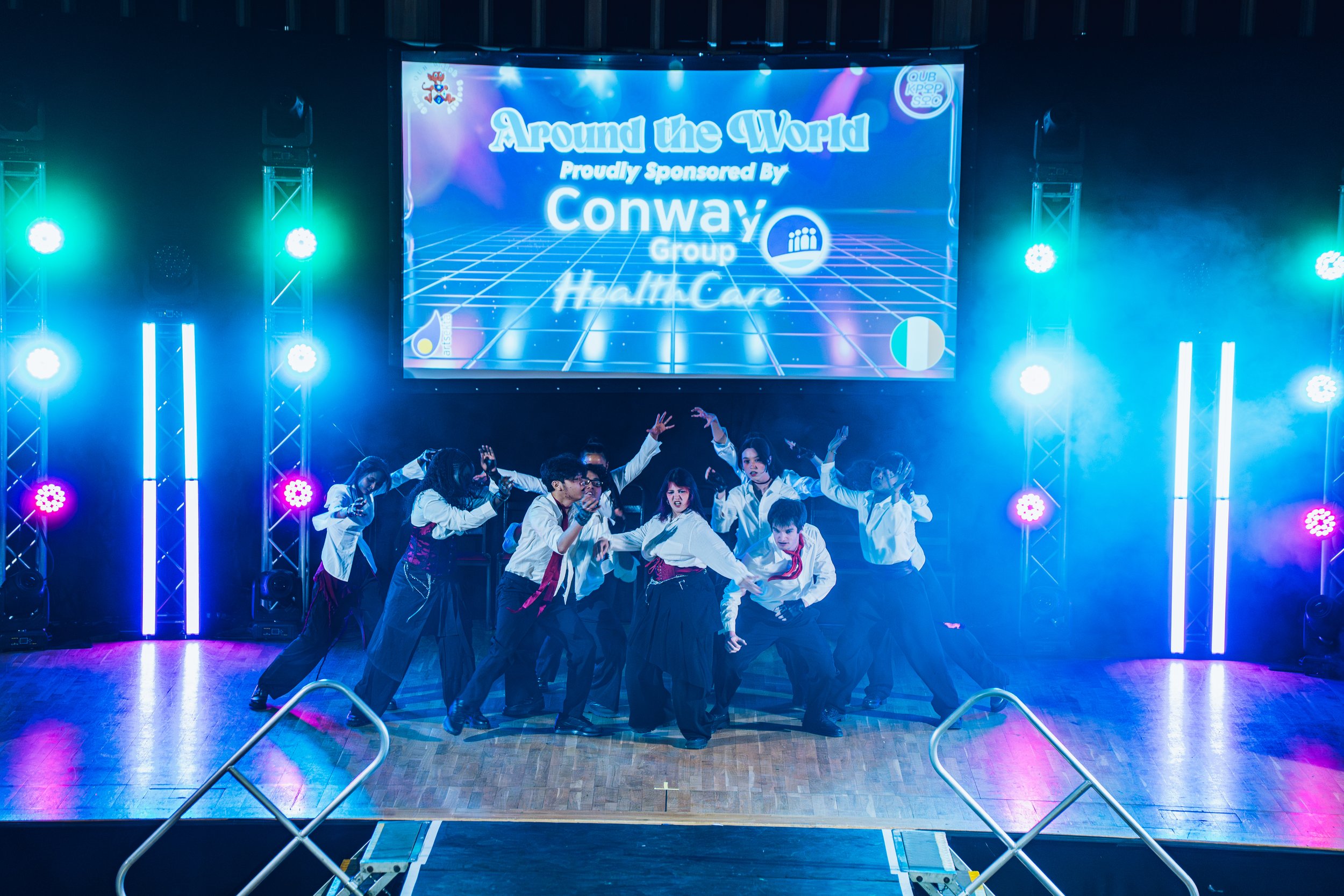
The requirement was straightforward in theory: extend the stage out into the room. In practice, it needed to match the exact height of the in-house stage. There’s very little tolerance here. Even a small difference creates a visible step and a trip hazard, and it breaks the visual line of the stage.
We built a custom staging solution using deck sections configured to the precise height of Whitla Hall’s existing stage. This included:
Matching deck height and tolerances
Integrating steps at both stage and floor level
Ensuring structural stability across the full catwalk length
The end result was a continuous platform that felt like part of the venue, not an add-on.
Technical Approach
The rest of the system was designed to be reliable and straightforward to operate over three full days.
Audio
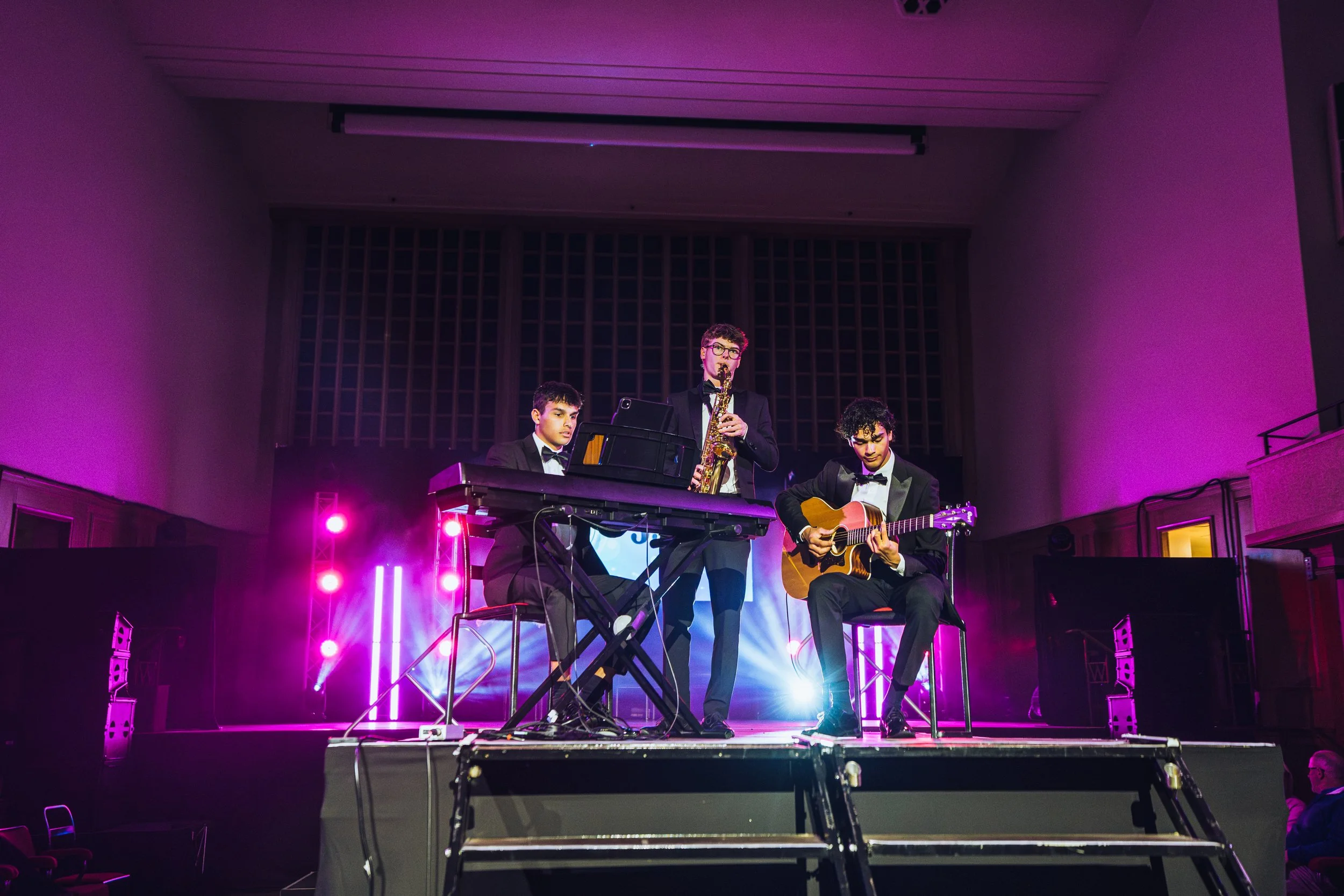
We used a Midas M32R with stagebox to manage inputs and outputs, giving flexibility for multiple microphones and sources. Wireless handhelds and bodypacks were used for presenters and performers, allowing movement across both the main stage and catwalk. L-acoustics Speaker deployment focused on even coverage rather than volume, ensuring speech intelligibility across the full room.
Video and Projection
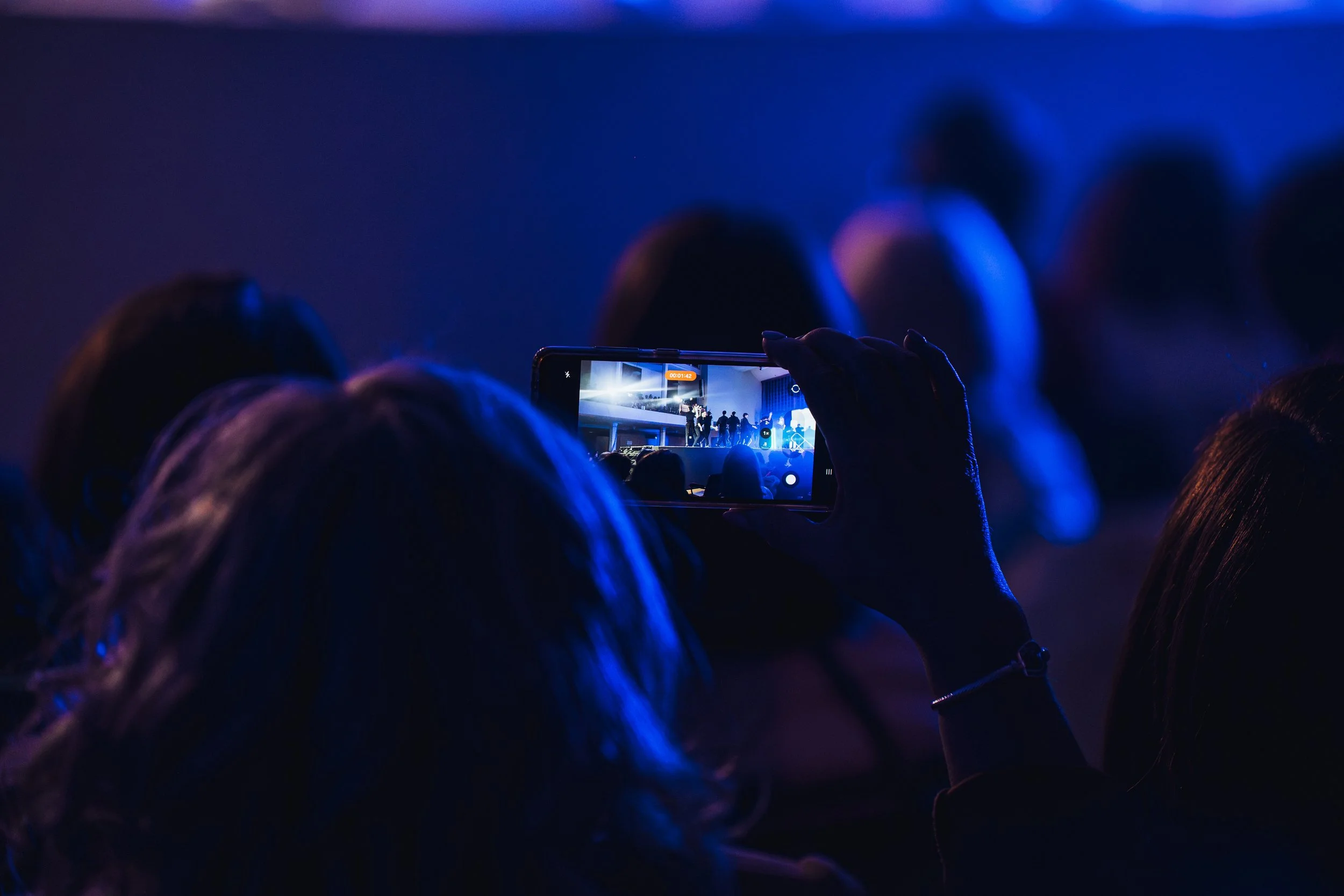
For visuals, we deployed a 7K NEC projector with long-throw lens, paired with a large fastfold screen.
A Roland V8HD handled switching between:
Presentation laptops
Video playback
Live camera feeds
This allowed smooth transitions without interrupting the flow of the event.
Lighting
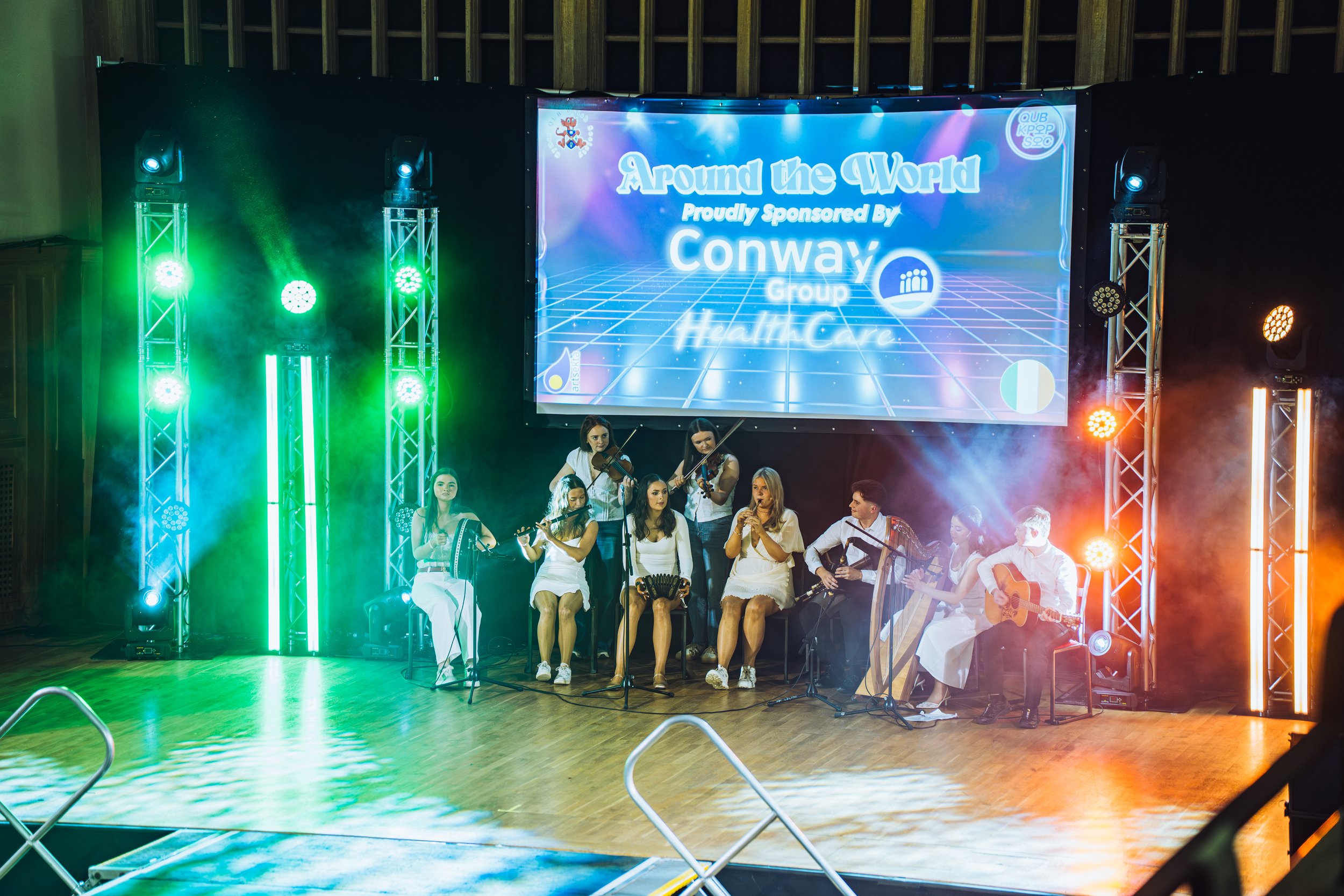
Lighting was built to support visibility and add structure to the stage rather than dominate it.
LED profiles were used for key lighting on presenters
Moving heads and LED PARs added depth and colour when needed
Rigging was handled via truss and lifters to keep positions consistent and safe
Infrastructure and Crew
Behind the scenes, the system relied on:
Truss and lifting systems for safe rigging
Distributed power and signal runs
Clear cable management across stage and catwalk areas
A team of technicians covered setup, live operation and de-rig, maintaining consistency across all three days
Takeaway
On paper, this was a standard conference-style setup. In practice, the success came down to getting one detail right and building everything else around it.
The catwalk could have been a weak point. Instead, it became a natural extension of the stage because the measurements, build and installation were handled properly.
That’s often where these events are won or lost. Not in the headline equipment, but in how well the details are executed.