Truss, rigging and power for corporate events in Belfast and Northern Ireland
The two things nobody notices when they're done properly - and the only two things anyone talks about when they're not.
Every screen, every light and every speaker at your event is hanging off something, and plugged into something. Get those two decisions right and the room simply works. Get them wrong and you find out on show day, in front of an audience.
AXL designs, supplies and installs the structure and the power behind corporate events in Belfast and across Northern Ireland. We survey the venue, work out what can be supported and what can be supplied, build it, run it for the duration of the event, and take it away again. It comes with our crew, we don't drop truss off at a loading bay and leave you to it.
What we supply
-
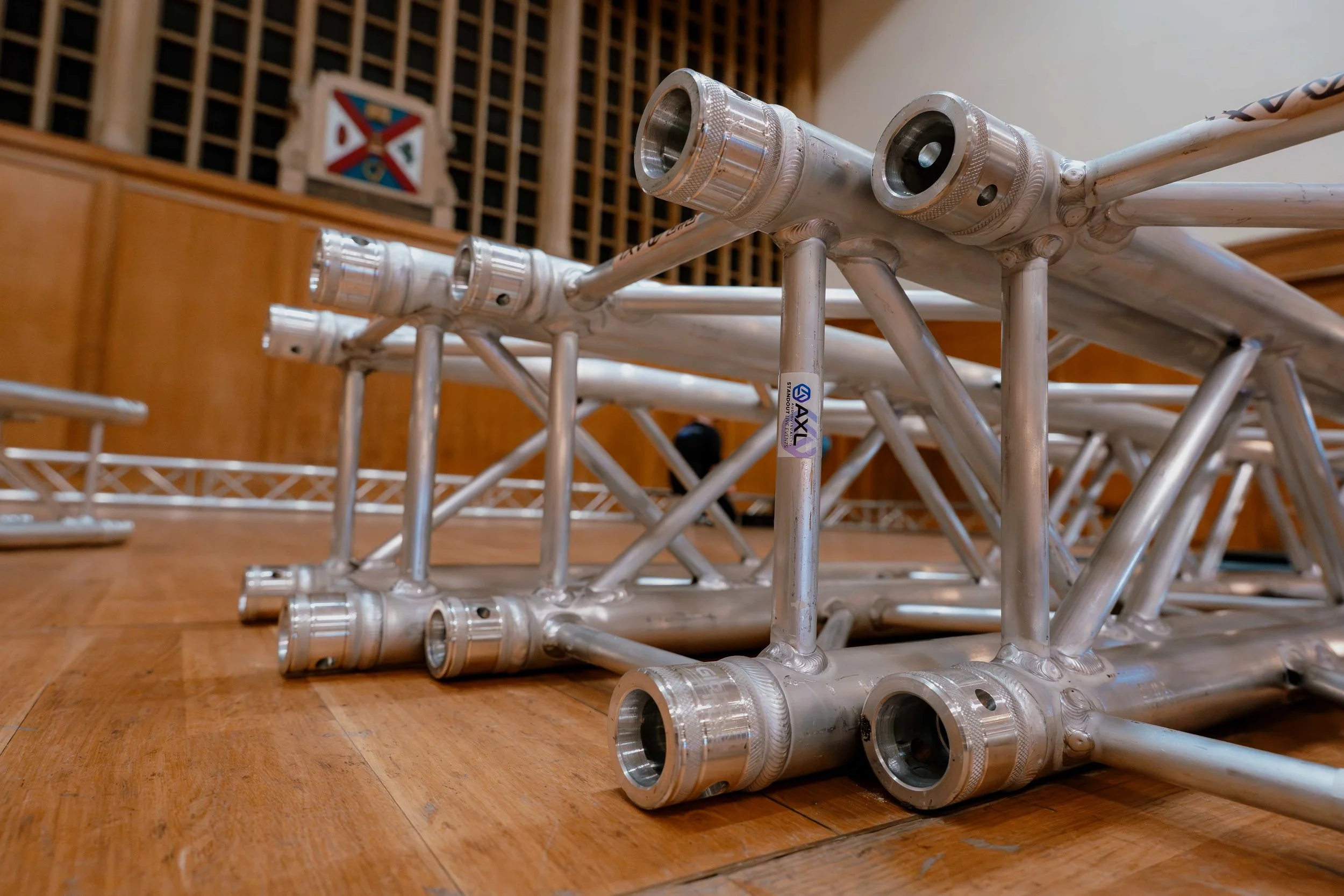
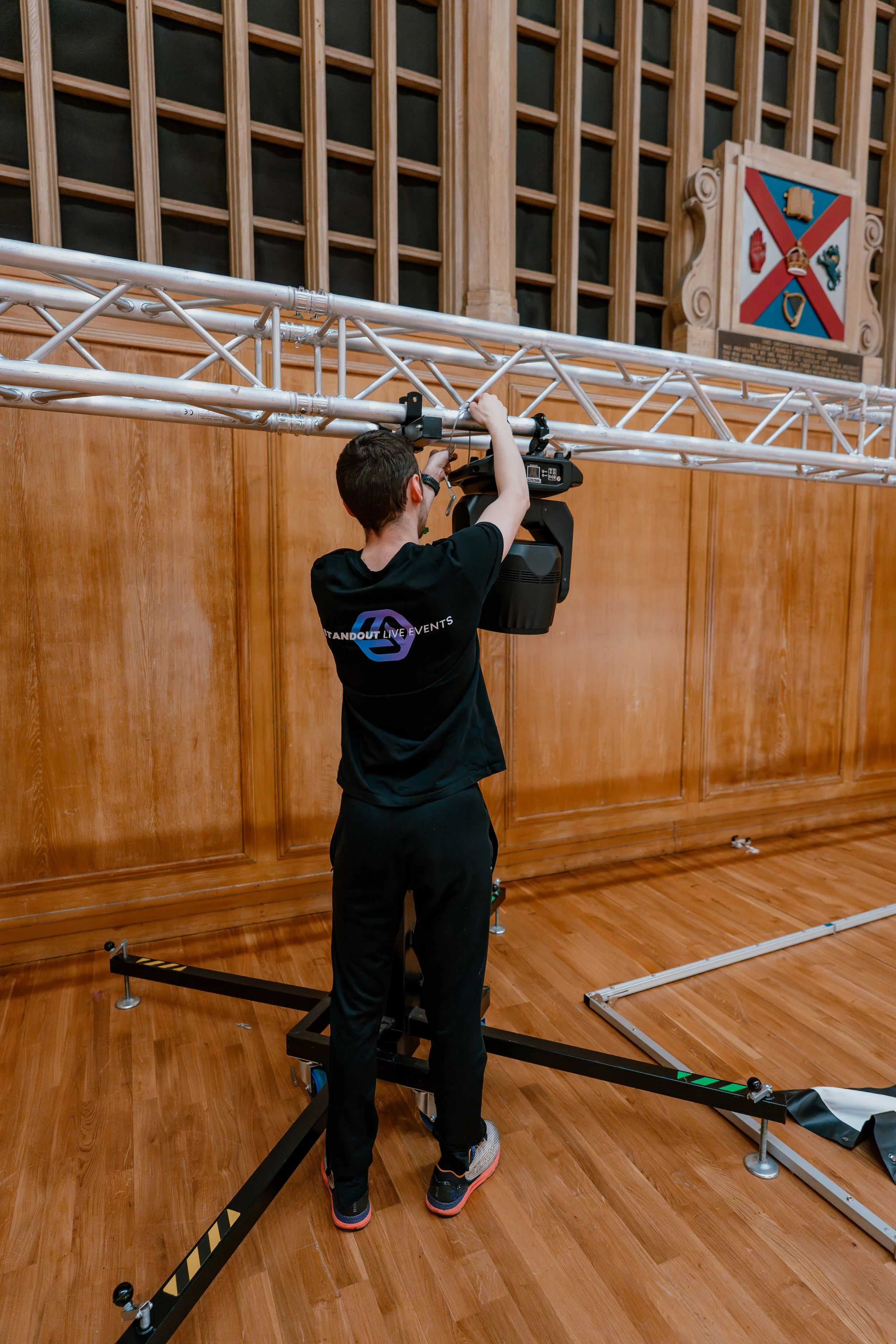
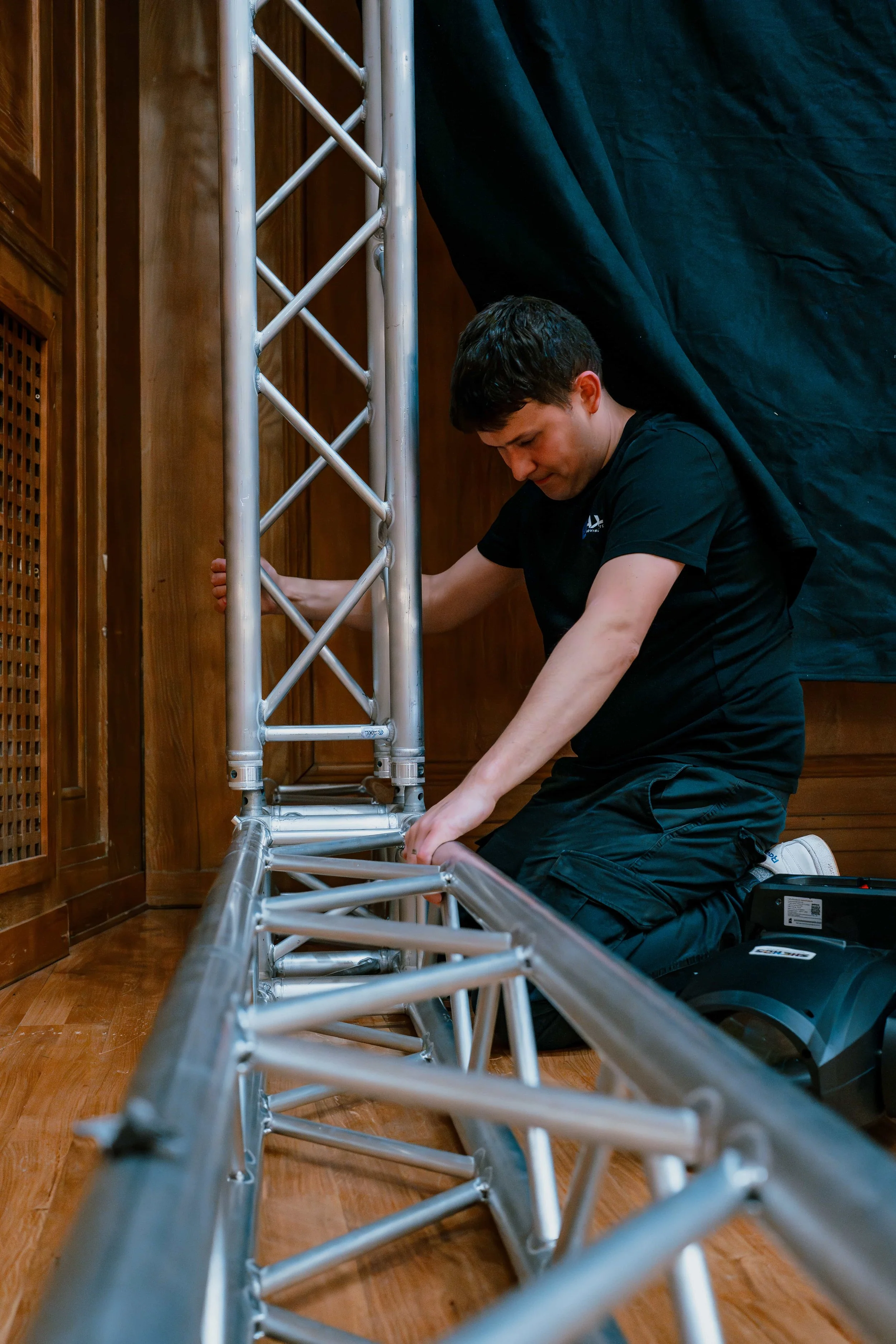
Global Truss F34 and F33 square truss on Kuzar K-5 lifting towers, base plates and stage weights. Goalpost frames for stage backdrops, header trusses for lighting and banners, and free-standing structures for LED walls where there’s nothing overhead to hang from. Black or white truss socks when the structure should disappear, or be part of the look.
-
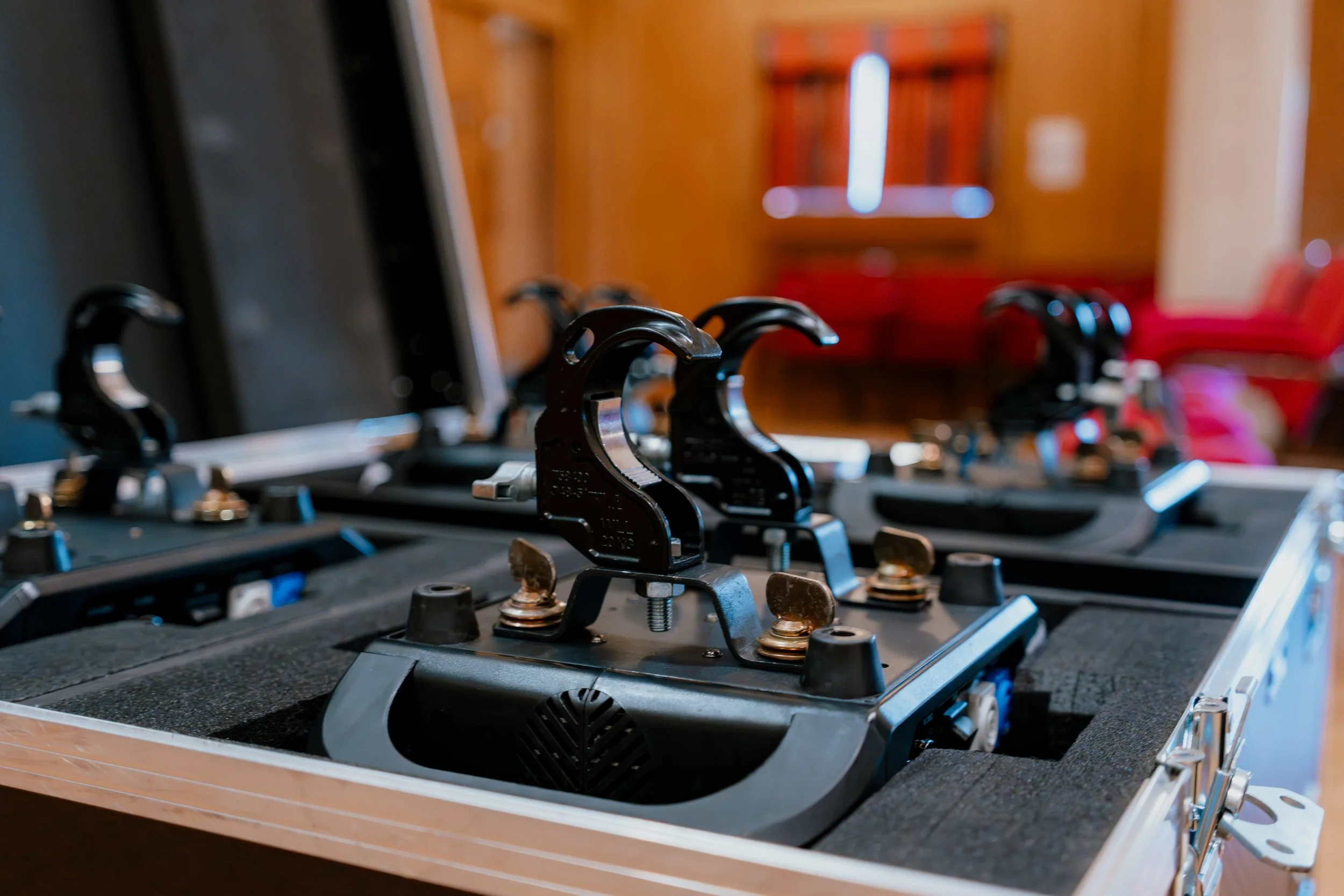
Rated spansets, shackles, G-clamps, half-couplers and safety bonds, all inspected and logged. We calculate the loads before we lift anything, and we plan the build around what your venue will actually allow, not what would be convenient.
-
Three-phase 63A distribution feeding 32A and 16A outlets, with the feeder cable, splits and runs to get power to every position in the room. Cleanly routed, correctly loaded, and separated so the audio system isn't sharing a phase with the lighting rig.
Ground-supported by default, flown where the venue allows it
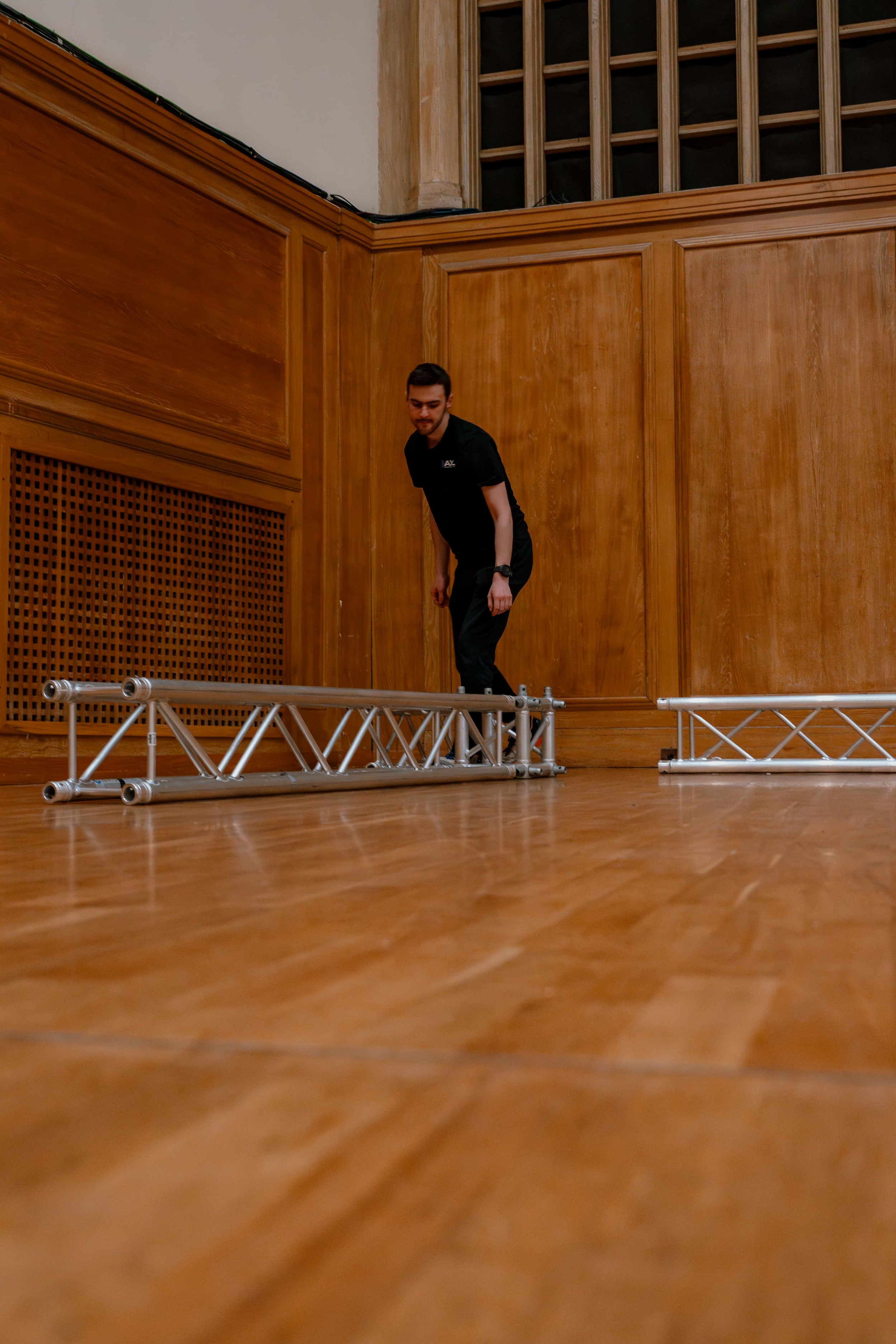
Most corporate venues in Northern Ireland have no rigging points at all, or points that are reserved for house systems. That's why the majority of our work is ground-supported: truss on lifting towers, weighted and braced, standing on the floor.
Ground support is often the better answer anyway. It doesn't depend on the venue's structure, it doesn't require the venue's rigging contractor, it can be built and struck quickly, and it goes into rooms - hotel ballrooms, marquees, exhibition halls, historic buildings - where flying simply isn't an option.
Where a venue does have usable rigging points and permits their use, we can work with them.
Most venues can hold your rig. Fewer can power it.
This is the conversation that catches organisers out most often, and it's worth understanding before you book a room.
Hotel ballrooms and conference suites are wired for catering, house lighting and a few 13A sockets around the perimeter. They are rarely wired for a production. An LED wall, a lighting rig and a PA system drawing simultaneously will find the limit of a domestic-style supply very quickly, and the failure isn't graceful. It's a tripped breaker halfway through a keynote.
The fix isn't complicated, but it has to happen early. We ask three questions at the survey stage: where is the supply, what is it rated at, and who has the key to it. From there we can design a distribution plan that spreads the load properly, keeps the sensitive equipment on a clean feed, and leaves headroom for the things nobody thought of: the catering urn, the exhibitor stand, the phone chargers behind the stage.
Rigging works the same way. The question is never really "can it hold it". Modern truss will hold far more than a corporate event needs. The question is what the venue will permit: the rigging points it has, whether it has any, the floor loading, the ceiling height, the access route from the door to the stage, and the get-in window you've been given. A room with a 2.4m doorway and no goods lift changes the design before anything else does.
We'd far rather have that conversation eight weeks out than at 6am on the morning of the build.
We’ve built in these rooms before
We've rigged and powered events at Titanic Belfast, Titanic Hotel Belfast, the Europa Hotel, St George's Market, Whitla Hall at Queen's, Campbell College, Galgorm Resort, Kingfisher Estate and Canal Court Hotel in Newry.
That matters more than it sounds. We already know where the three-phase supply is at Galgorm, what the get-in looks like at St George's Market, and what the ceiling will and won't take at Titanic Hotel. On a first visit to a new venue we survey properly. On a return visit, we've already done the thinking.
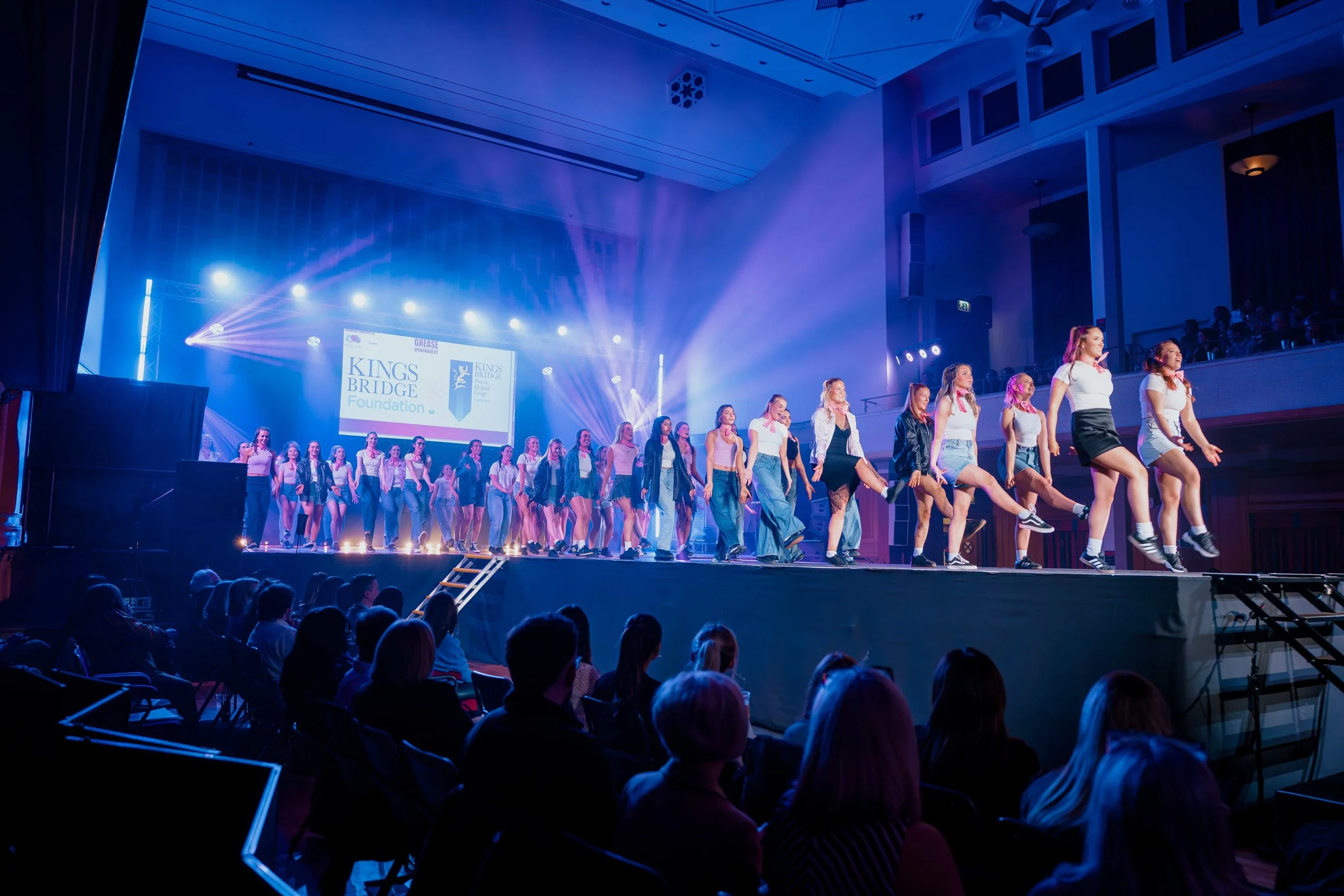
Rigging and power on its own, or as part of the whole production
Most of the time this sits inside a full production, we're already supplying the PA, the lighting and the LED wall, so the structure and the power come as part of the design rather than as a separate line item. That's usually the cheapest way to do it, because one crew builds everything in one visit.
We also work as the rigging and power supplier on productions run by other companies, and white-label for agencies and event management firms who need the structure handled by someone local. If you're producing the event and just need the frame and the feed, that's fine - tell us what's going on it and we'll design to that.
Frequently asked Questions
-
Not always. A modest conference with a PA, a projector and some uplighting will usually run on standard 13a supplies. You start needing three-phase when you add an LED wall, a moving-light rig, or several of those together, the combined draw exceeds what a normal ring main can supply safely. We work it out from the equipment list at the planning stage and tell you before you book the room, not after.
-
Flown rigging hangs from the building's structure using the venue's rigging points. Ground-supported rigging stands on the floor, truss lifted on towers, held down with base plates and weights. Most corporate venues in Northern Ireland have no usable rigging points, so ground support is the standard approach, and it's often better: faster to build, independent of the venue's structure, and possible in rooms where flying isn't allowed at all.
-
Yes, it's most of what we do. Ballrooms are usually ground-support jobs because there's nothing overhead to hang from and the ceiling is often decorative. We survey the room first for floor loading, ceiling height, doorway access and where the power comes from, then design a structure that fits. Ceiling height is usually the limiting factor for how tall a screen or backdrop can be.
-
The venue provides the supply; we provide the distribution. That means we take whatever the venue has, typically a three-phase 63A or 32A supply in a plant room or a wall box, and distribute it safely around the room to every piece of equipment. If the venue has no adequate supply at all, that's a different conversation, and one to have early. In most cases we can supply a generator.
-
Yes. Our LED walls are designed to be either ground-stacked on their own bases or hung from ground-supported truss. Neither touches the building. This is the usual solution in venues with protected or decorative ceilings, and it's why we can put a large screen into rooms that other suppliers say can't take one.
-
Risk assessments and method statements (RAMS) for every event, issued in advance so your venue and your own health and safety team can read them before the build rather than on the morning of it. We hold public liability and employers' liability insurance and will send certificates on request, most venues ask for them as a condition of access, so it's worth getting them into the file when you book rather than chasing them the week of the event.
Where the build warrants it, we also produce mockup drawings showing exactly what sits where in the room, and structural designs for the rig itself. Not every job needs that. A header truss over a stage doesn't. A large ground-supported LED wall, an unusual structure, or a venue with tight constraints does, and that work is far better done at the planning stage than argued about on site.
-
Four to six weeks is comfortable for most corporate events. Twelve weeks is sensible during awards season, September to December, when the good venues and the good crew both go quickly. If the venue needs a rigging plan submitted in advance, some do, build that into your timeline, because it can't be done the week before.
-
Yes, we can arrange generator power. For the Hack the Isles Live Final 2026 at Campbell College Belfast, power generation was delivered alongside the LED wall, staging, streaming, audio and lighting. If a venue, marquee or outdoor site cannot supply what the production needs, we plan the generator, distribution and cable routes as part of the same design.
Send us the room and the equipment list
If you know the venue, we can usually tell you within a day whether the rig will work, what power you'll need and what the venue will need to approve. If you don't know the venue yet, even better, we'll tell you what to ask before you sign.
Related Pages